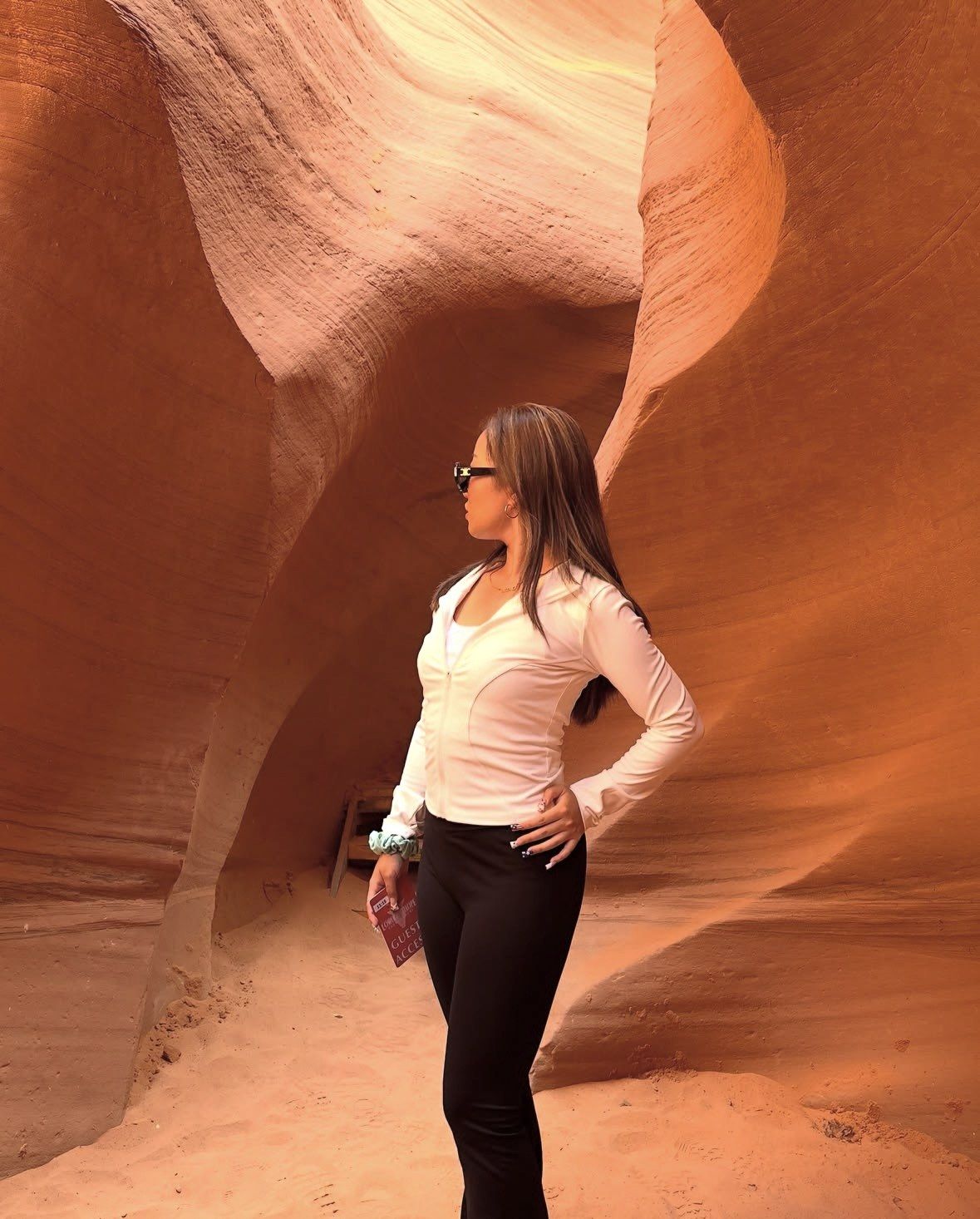
How Water Cut the Slot
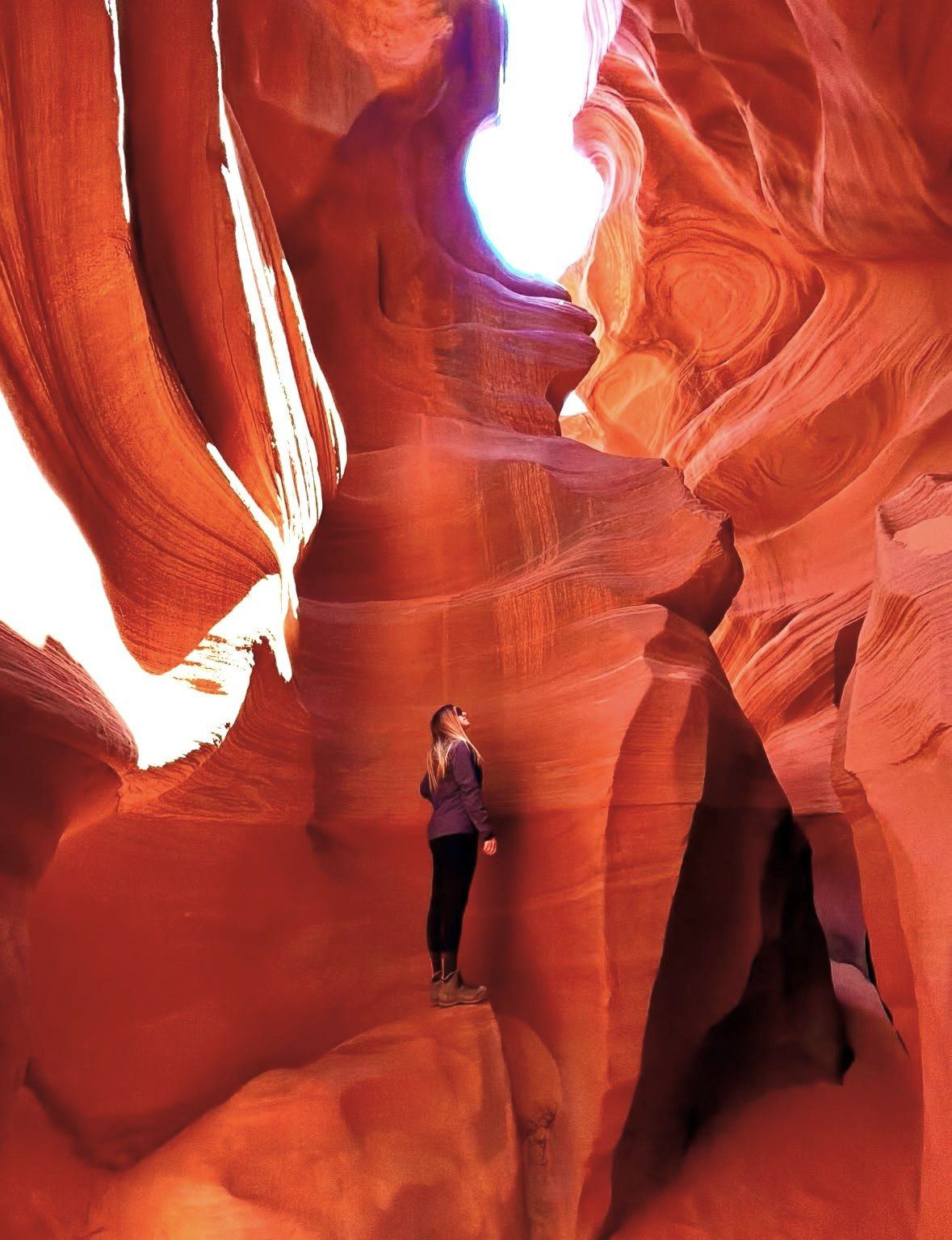
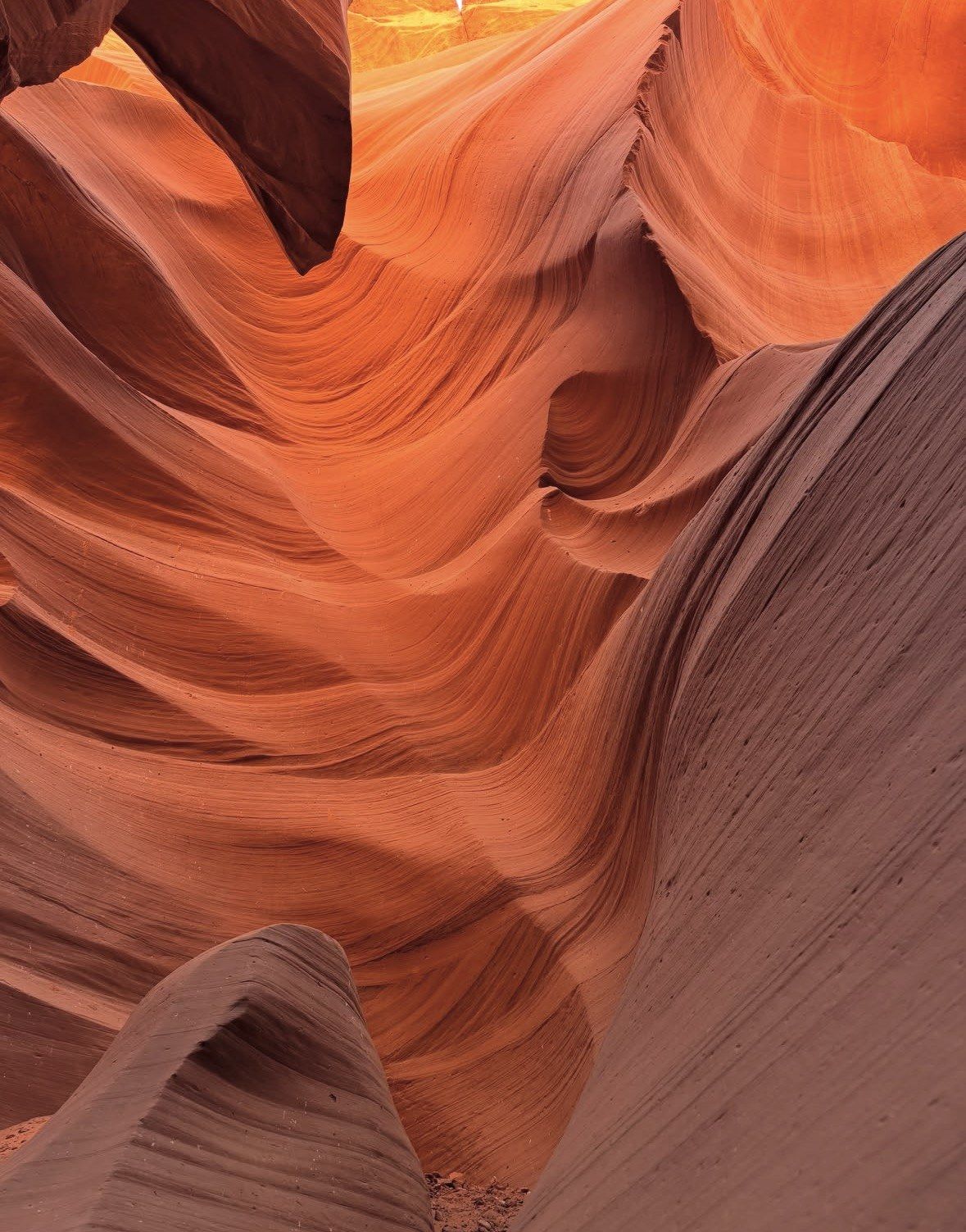
The rock came first. Antelope Canyon is cut into Navajo Sandstone dated at roughly 8 to 60 million years old, and the shape you walk through was made almost entirely by water moving fast through a crack in that stone. Rain that falls miles away collects, funnels into the drainage and scours the walls, carrying sand that polishes whatever it leaves behind. What remains is a slot about 120 feet deep, or 37 m, with a floor sitting at 3,704 feet above sea level. No single event built it. The same flash flooding simply repeated over more summers than anyone can picture.
Names carry the oldest description of the place anyone has. Upper Antelope Canyon is Tse'bighanilini, which Navajo Nation Parks translates as the place where water runs through rocks; Lower Antelope is Hasdez'twazi', the spiral role arches. Both read as plain accounts of what the canyons do. This is Navajo Nation land, and the two canyons sit inside Lake Powell Navajo Tribal Park, whose office is at 337 N. Navajo Drive in Page. Neither entrance is far from town. The Upper Antelope park entrance is about three miles east of Page on Highway 98, and the Lower Antelope site is on Indian Route 222, under ten minutes' drive east.
Why Every Visit Needs a Navajo Guide
A Navajo guide is compulsory at every Antelope Canyon location. There is no self-guided route, no walk-in-on-your-own access, and no part of the Lake Powell Navajo Tribal Park area can be reached without a guided tour booked with a licensed operator. That single rule shapes the rest of your visit: how long you stay inside, which direction you walk, what you may carry. Navajo Nation Parks lists the operators it licenses for each section, and the tours on this site go in with those guides. The tribal park entry fee is $15 per person per entry, charged separately from guided tour prices.
The park rules are short and absolute. Navajo Nation Parks and Recreation prohibits littering, rock climbing, drones and dogs across all of its park lands, Antelope Canyon included, and alcohol is prohibited across the Navajo Nation. A two-hour limit on time inside Upper Antelope has been in force since 1 May 2011, and Upper is now walked as a one-way route instead of doubling back on itself. At Lower Antelope the park warns plainly that the canyon is narrow and involves steep stairs, so it may not suit visitors who are claustrophobic. Bag rules change from canyon to canyon: clear bags only at Upper, and no bags of any kind on the Antelope Canyon X hiking tour.
Photography permits no longer exist here. Navajo Parks and Recreation does not issue photography or filming permits for Upper or Lower Antelope Canyon, citing crowding and safety, and it is not accepting applications for Antelope Canyon X either. Cameras and phones are fine on a normal tour; tripods and monopods are banned in the canyons. Wear closed-toe walking shoes for the sand and the stairs, and carry a light layer, because the interior can be cool. One more thing on passes: Antelope Canyon sits outside Glen Canyon National Recreation Area, so America the Beautiful and Glen Canyon passes are not accepted at the canyon itself.
Antelope Canyon in Numbers
8 to 60 million
years, the age of the Navajo Sandstone the canyon is cut into
120 feet
depth of the canyon, about 37 m
660 feet
walkable section of Upper Antelope Canyon, about 200 m
1,335 feet
length of Lower Antelope Canyon, about 407 m
3,704 feet
elevation of the canyon floor, 1,129 m
1 May 2011
date the two-hour limit inside Upper Antelope took effect
How the Canyon Came to Be Managed
Management has tightened as visitor numbers grew. The two-hour cap inside Upper Antelope dates from 1 May 2011, and Upper now runs in one direction, which keeps groups moving rather than meeting head-on in a passage a few feet wide. The $15 Navajo Nation entry fee is charged per person per entry on top of tour prices; if you do Upper and Lower on the same day, keep your tribal fee receipt and you will not pay it twice. Some tours on this site already cover it. The Award-Winning Lower Antelope Canyon & Horseshoe Bend Tour includes the Navajo Nation Permit Fee, while the Secret Antelope Canyon and Horseshoe Bend Overlook does not.
Light beams made Upper Antelope famous, and they are seasonal. The main window runs from April through September, on clear, sunny days only, and among the published departures the 11:20 a.m. tour is identified as giving the best chance. Beams in early April and late October are smaller and shorter-lived. In Antelope Canyon X they appear from May through early August, with the popular visiting window between 10:30 a.m. and 1:00 p.m. The clock catches people out every summer: tour times run on Arizona time, Mountain Standard with no daylight saving, even though the surrounding Navajo Nation does observe it, so beam timings never shift.
Weather closes the canyons, sometimes at short notice, and Navajo Nation Parks warns about it in capital letters. The National Weather Service puts the Arizona monsoon from 15 June to 30 September, with moisture usually reaching northern Arizona in the first week of July, and much of northern Arizona takes in roughly 40 to 50 percent of its annual precipitation in that stretch. Build a spare half-day into any July, August or September itinerary. Page stays dry and hot the rest of the time: June averages about 0.20 inch of precipitation, August and October about 0.67 inch, and July runs to an average daily maximum near 96.0 °F. January is the cold end, near 42.9 °F by day and 24.7 °F at night.
What a Visit Looks Like Now
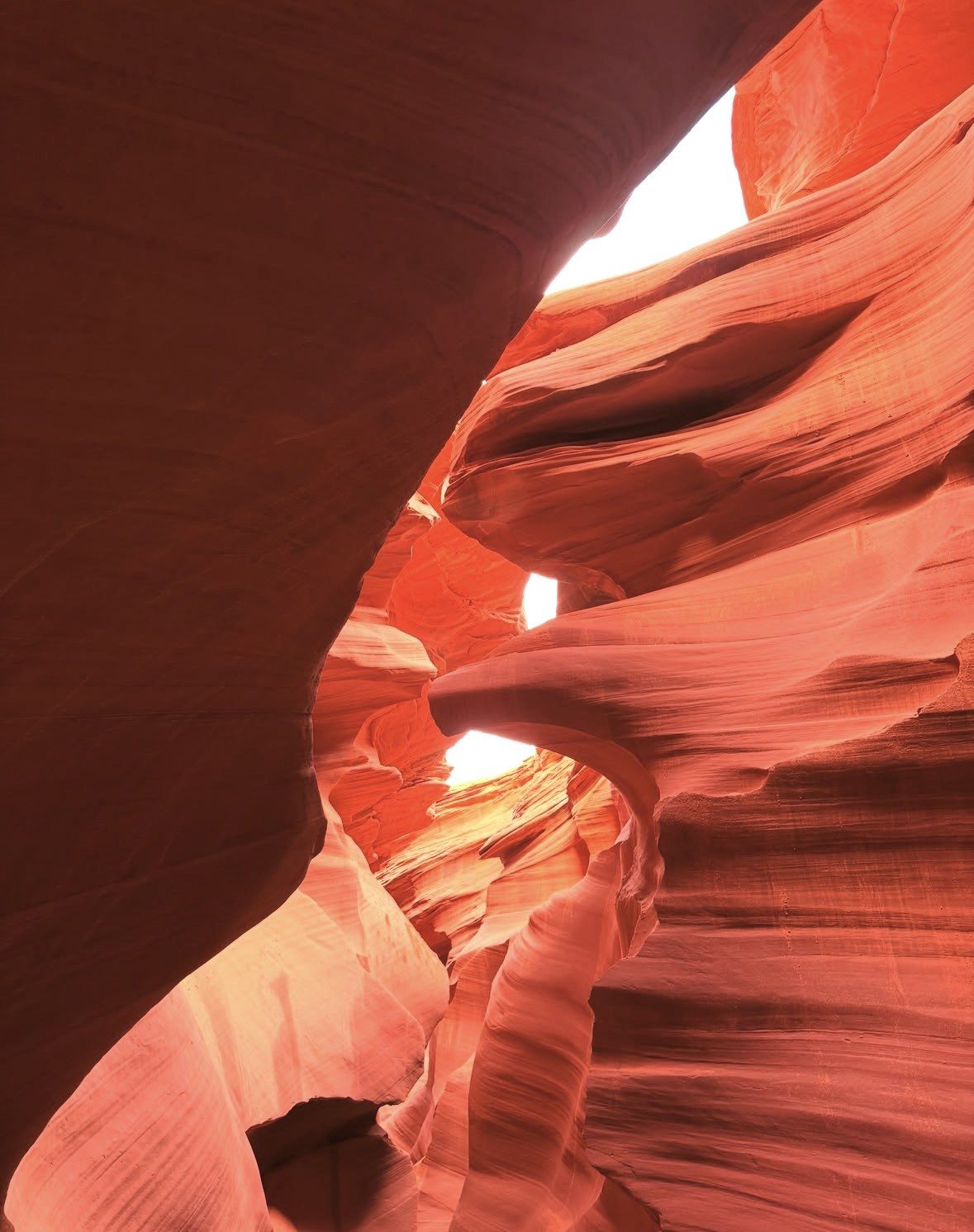
A visit today is short, structured and busy. The tribal park lists summer hours of 8:00 a.m. to 5:00 p.m. and closes on Thanksgiving Day, Navajo Nation Family Day the day after, Christmas Day and New Year's Day, so check on the day for anything outside summer. Upper and Lower are two separate canyons rather than two ends of one walk, and they feel different: about 660 feet of walkable passage at Upper, about 1,335 feet at Lower, where you descend stairs and ladders with handrails bolted into the canyon walls. March to November is the peak window and tours sell out, so settle your dates and book early.
Match the tour to your base and your legs. Without a car, take the Award-Winning Lower Antelope Canyon & Horseshoe Bend Tour, from $160, 14-15 hours, 4.9 ★ (8468 reviews), which covers Lower Antelope and Horseshoe Bend with the Navajo Nation Permit Fee, admissions and a deli lunch included. If you are already in Page with your own transport, the Lower Antelope Canyon Hiking Tour from $94 runs about an hour, all fees and taxes included. Set on the beams: the Upper Antelope Canyon Tour-AACT from $119 lasts 1 hour 20 minutes, and you want to arrive 30 minutes early. If stairs and ladders are out, the Antelope Canyon Photo Boating Excursion from $199 gives you the walls from the water.