In shortWear closed-toe walking shoes with grip, clothes you can climb stairs and ladders in, and a light layer: the sandstone interior stays cool while Page averages a daily maximum near 96.0 °F in July. Carry phone, water and tip money in your pockets. Bags must be transparent at Upper Antelope, and no bags of any kind are allowed at Lower Antelope since 4 May 2023.
96.0 °FJuly average high, Page
42.9 °FJanuary average high
150 stairsclimb out of Upper Antelope
45 minutescheck-in before Lower tours
What to wear in Antelope Canyon
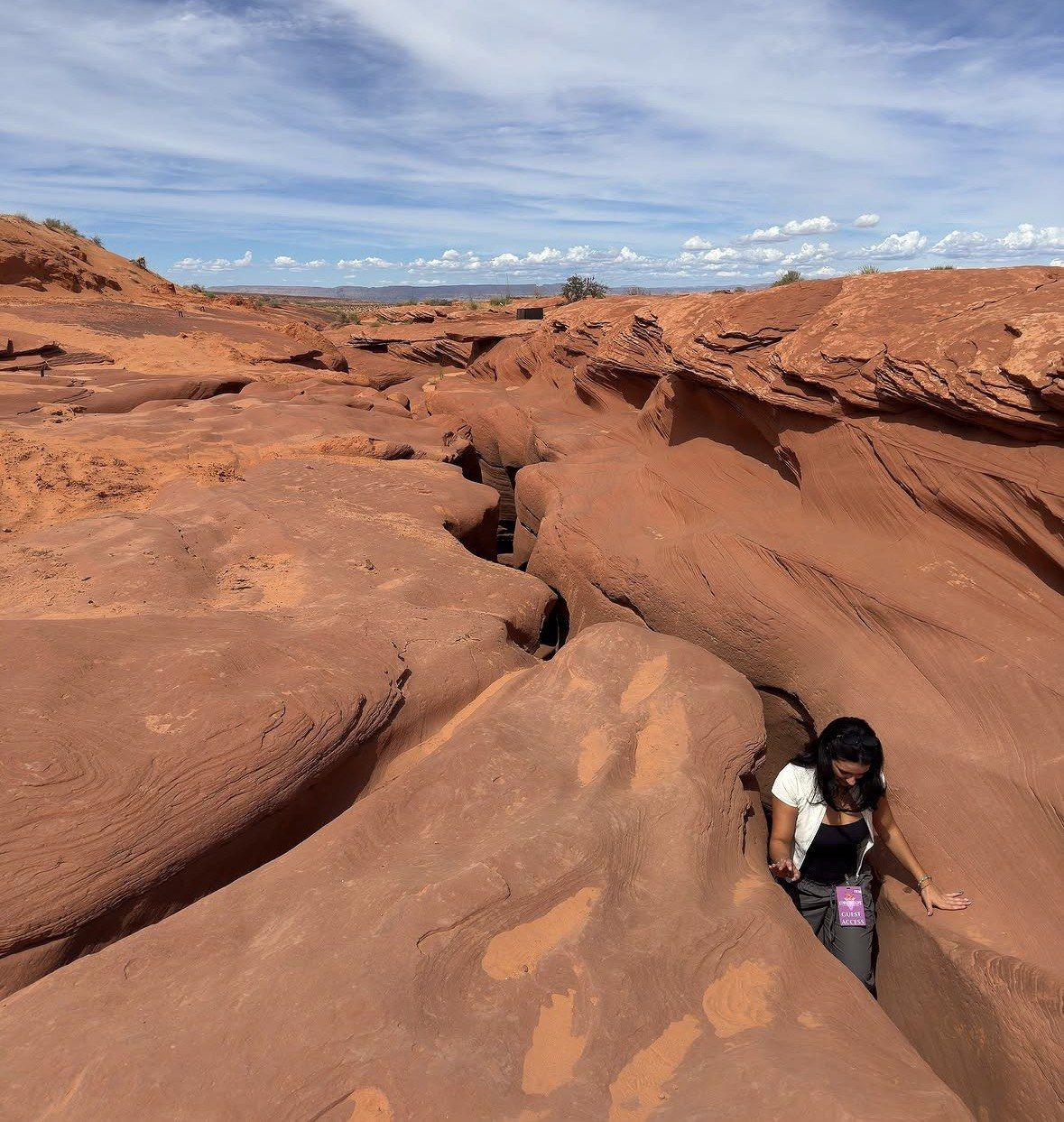
You dress for two climates in the same hour. The canyon floor sits at 3,704 feet (1,129 m) and the slot runs about 120 feet (37 m) below the desert surface, so the sandstone keeps the passages cool while the open ground above heats up. The official advice for Lower Antelope is closed-toe walking shoes plus a light layer for exactly that reason. A thin fleece or a long-sleeved shirt you can tie round your waist does the job in any month from April to October.
The sun gets you on the approach rather than inside. Dress for the walk-in at Lower Antelope, where you go in on foot from the check-in area on Indian Route 222, under 10 minutes' drive east of Page off Highway 98, parking free and no vehicle transfer involved. The hat goes on earlier at Upper Antelope: the park entrance is roughly three miles east of Page on Highway 98, and 4x4 tour vehicles run visitors in from there, about 15 minutes each way. Either way you spend time standing in open desert before you see shade, so a hat, sunglasses and sunscreen matter more than you expect.
Winter demands warm clothing. January at Page averages a daily maximum near 42.9 °F and a minimum near 24.7 °F, and the shaded floor of the canyon never gets direct sun to warm it. Take gloves and a real jacket for a morning slot, and remember the tribal park publishes summer hours of 8:00 a.m. to 5:00 p.m. and nothing for winter, so check what time your tour actually runs before you decide how warm to dress.
| Month | Average daily high at Page | What to put on |
|---|
| January | 42.9 °F (average low 24.7 °F) | Warm jacket, gloves, hat, closed shoes |
|---|
| April | 69.1 °F | Long sleeves plus a light fleece for the shade |
|---|
| May | 79.1 °F | T-shirt, light layer in hand, sun hat |
|---|
| June | 90.6 °F | Lightest clothing, hat, sunglasses; driest month at about 0.20 inch |
|---|
| July | 96.0 °F | Shorts or thin trousers, hat, sunscreen, extra water |
|---|
| August | 92.8 °F | As July; wettest month at about 0.67 inch, so watch the sky |
|---|
| September | 84.3 °F | T-shirt and one layer, still full sun protection |
|---|
| October | 71.0 °F | Layers morning and late afternoon; about 0.67 inch of rain on average |
|---|
Antelope Canyon shoes: closed toe with grip
Lower Antelope requires closed-toe walking shoes. Your soles are working for about 1.1 miles round trip across 60 to 90 minutes, and they have to cope with five flights of stairs down into the largest cavern on the route and with ladders whose handrails are bolted into the canyon walls. Metal rungs and sandy soles are a bad combination in sandals, and Navajo Parks itself describes this section as narrow with steep stairs.
Upper Antelope is flatter inside, with the first 400 metres easy and sandy and no ladders or stairs along that stretch, but the exit is the hard part: the operator states there is no wheelchair access, that guests must hike unassisted and that you climb 150 stairs back up to the vehicles. Antelope Canyon X is entered and left by a staircase about 200 feet long built from railroad ties, with no ropes or ladders and a sandy floor throughout.
Lace-up trainers or light hiking shoes are the right answer everywhere. Sand works its way in whatever you wear, so pick socks that come above the shoe line and shoes you do not mind emptying out in the car park.
- Good: lace-up trainers, light hiking shoes, anything closed with a grippy sole
- Leave at the hotel: flip-flops, slides, open sandals, heels, smooth-soled city shoes
- Trousers or shorts you can climb a ladder in, nothing long enough to catch underfoot
- A spare pair of socks in the car if you are heading on to Horseshoe Bend afterwards
The Lower Antelope walk, kit sorted
If you are in Page with your own transport, this is the straightforward way into the stairs-and-ladders section: from $94 for 1 hour with all fees and taxes included, 4.9 ★ (7729 reviews), check-in forty-five minutes before the tour time at the green-roofed office inside the tribal park.
★ 4.9/5 · 7,729 reviews
Fine sand, lenses, hair and eyes
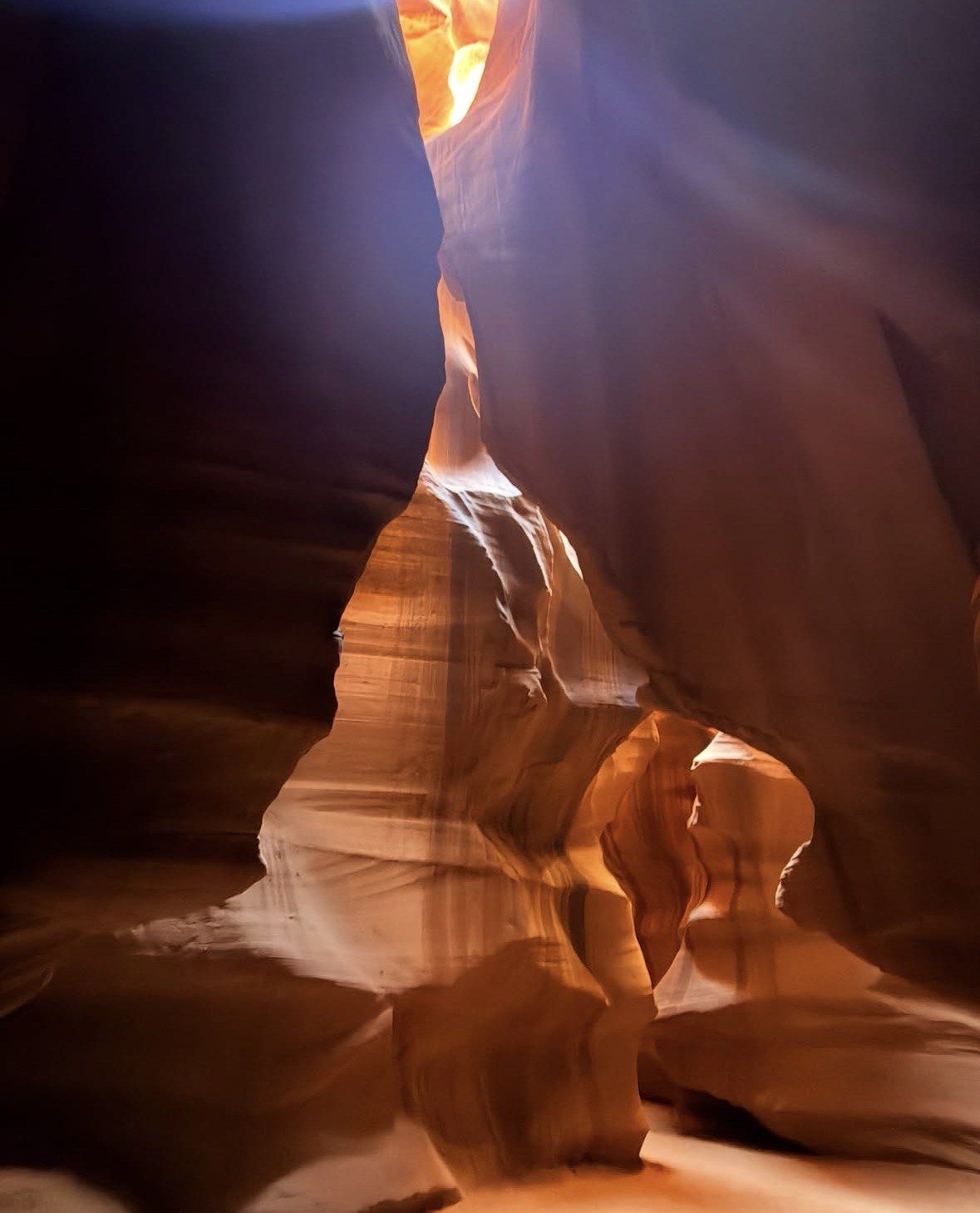
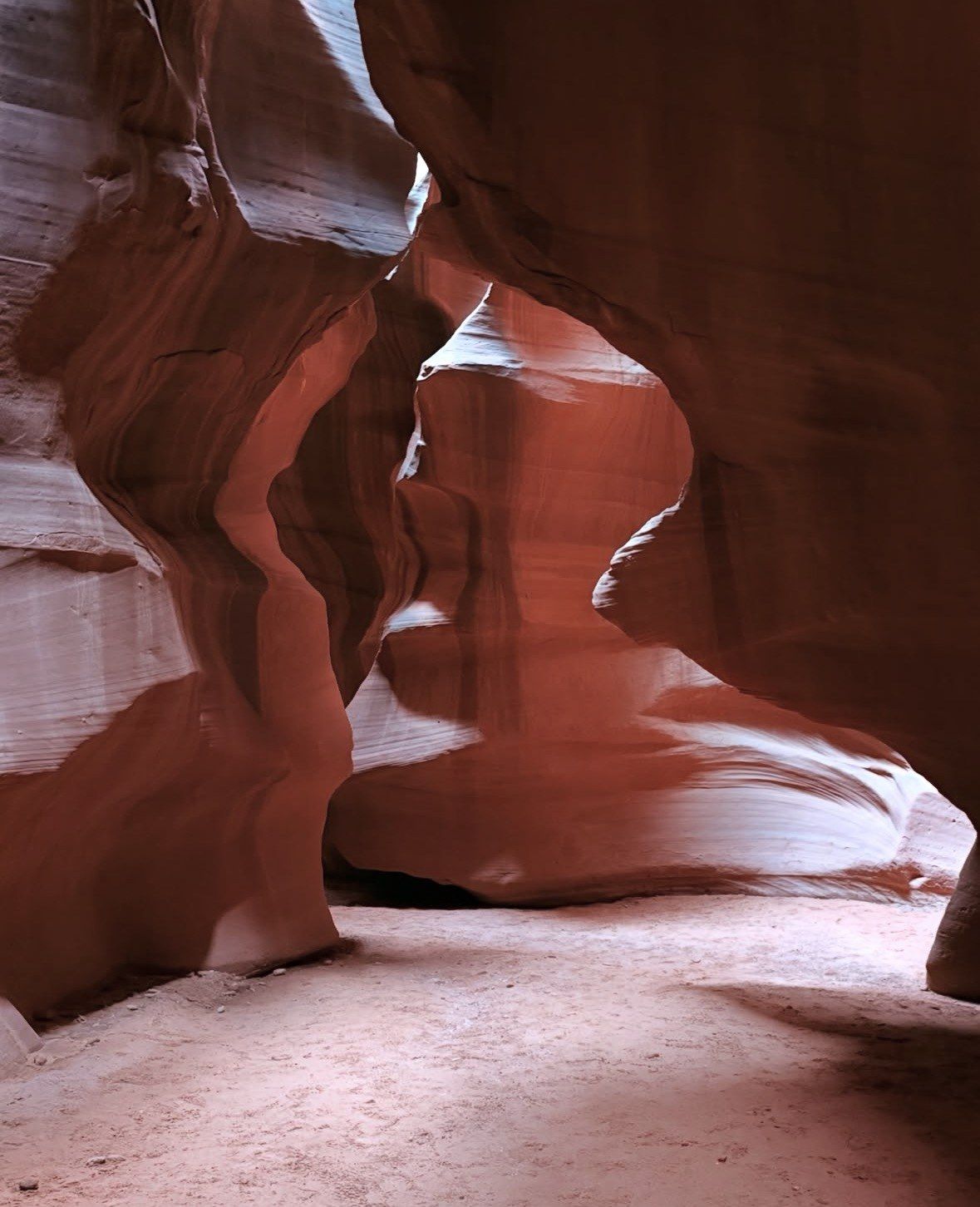
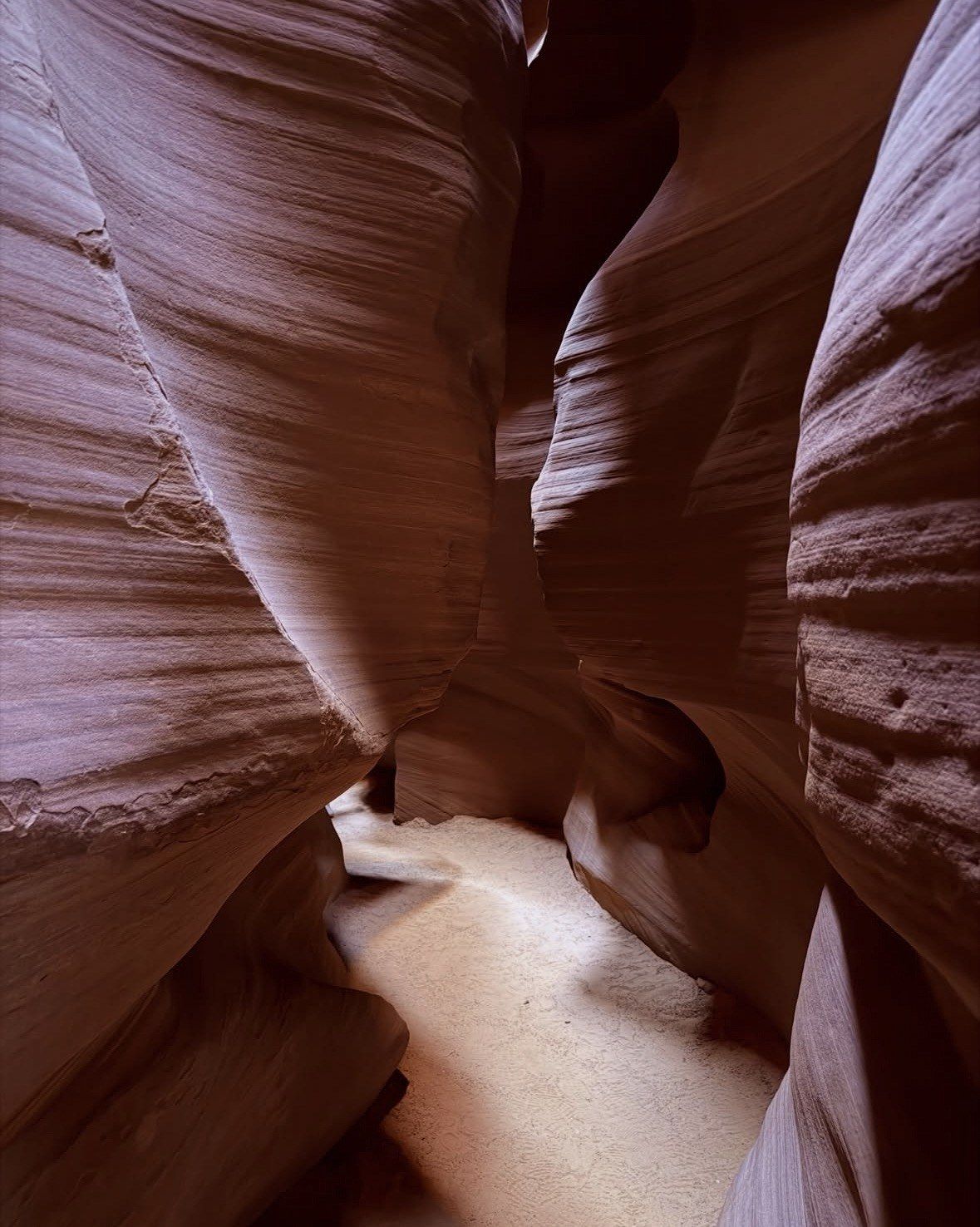
What you are walking through is Navajo Sandstone, roughly 8 to 60 million years old and widened mainly by flash flooding, which for packing purposes means loose grit on every surface. Fine sand moves along the passages and settles on lenses, screens, hair and anything with a zip. Nothing is damaged by one tour, but a dirty lens shows up in every frame you take afterwards.
Sunglasses earn their place here as eye protection as much as sun gear, and contact lens wearers should carry glasses as a fallback. Tie long hair back or wear a cap; the passages are tight and you will be looking straight up for most of the walk. Keep a soft cloth in a pocket and do your lens cleaning once you are back outside.
Changing lenses inside is a bad idea and largely unnecessary, since tripods and monopods are banned and photography is handheld in any case. A phone kept in a front pocket between shots comes out noticeably cleaner than one held in your hand for an hour.
What cannot come in with you
The rules change from one entrance to the next, which is why generic packing advice gets people turned away at check-in. Read the line for the section you have booked and leave everything else in the vehicle; none of the official pages mention lockers or bag storage at the entrances.
The camera restrictions are not just operator preference. Navajo Parks & Recreation has stopped issuing photography and filming permits for Upper and Lower Antelope Canyon, citing crowding and safety, and applications for Antelope Canyon X are not being accepted either, so no paperwork exists that would get a tripod through the gate. Cameras and phones are fine on the standard tours, while professional camera equipment is turned away.
- Upper Antelope: bags must be transparent, and opaque bags may not be placed inside the clear one; water, medication and a wallet can go in your pockets or the clear bag; cameras allowed, tripods, monopods and selfie sticks banned inside the canyon
- Lower Antelope: no bags of any kind, including transparent and clear bags, a rule in force since 4 May 2023; tripods and professional camera equipment are banned on all Lower tours
- Antelope Canyon X hiking tour: no bags at all, hydration packs included; take water and a phone or camera in hand, with one camera bag allowed only to photography-tour guests
- Everywhere in the tribal park: pets, drones, rock climbing and littering are all prohibited
- Across the Navajo Nation: alcohol possession and consumption are prohibited, and smoking is banned on the Antelope Canyon X property
Checklist before you leave the car
Use the check-in lead time to sort your pockets. The Upper Antelope tour listed here wants you at its meeting point 30 minutes early, with free parking there, while the Lower Antelope hiking tour sets check-in forty-five minutes before tour time at Dixie's Lower Antelope Canyon, the building with the green roof, first left once you turn into the Navajo Tribal Park. That is also when the bag question gets settled, so walk up already carrying only what is allowed.
Set a watch before you go. Departures run on Arizona time, which skips daylight saving, while the surrounding Navajo Nation does change its clocks, so a phone that has latched onto the wrong zone will read an hour out. The $15 per person, per entry charge for Lake Powell Navajo Tribal Park sits separately from guided tour prices, so check what your booking covers: all fees and taxes are included on the Lower Antelope hiking tour and on the Upper Antelope tour on this site, and the 14 to 15 hour day tour covers the Navajo Nation Permit Fee. Gratuities are not included on any of them, with 15% to 20% suggested on the day tour, so bring small cash.
Rain changes both the packing list and the odds of going in at all. The Arizona monsoon runs from 15 June to 30 September, moisture normally reaches northern Arizona in the first week of July, and Navajo Nation Parks states in capital letters that the canyons can close at short notice in bad weather. Take a morning departure in those months, leave a spare half-day in the plan, and keep in mind that the free cancellation window on the tours listed here closes 24 hours before departure.
- On you: closed-toe shoes, light layer, hat, sunglasses, sunscreen, phone, cash for the tip, water you can hold
- Pockets only at Lower Antelope; a clear bag is the maximum at Upper Antelope
- In the car: backpacks, handbags, hydration packs, tripods, monopods, selfie sticks, drones
- Not on the trip at all: pets, which are banned at every Navajo Tribal Park location, and alcohol
- Tribal fee receipt in a pocket: show it at the second entrance if you are visiting both canyons the same day
Questions people ask
Do I really need a jacket in July?
Take a light layer rather than a jacket. Page averages a daily maximum near 96.0 °F in July, so you will be hot on the approach, but the sandstone keeps the passages cool and the official advice for Lower Antelope pairs closed-toe shoes with a light layer. A thin long-sleeved top tied round your waist is enough.
Can I carry a water bottle into the canyon?
Yes, as long as it is in your hand or a pocket. At Upper Antelope water, medication and a wallet may be carried in your pockets or in a clear bag, and at Antelope Canyon X the operator tells guests to bring only water and a phone or camera because no bags are permitted. At Lower Antelope, with all bags banned since 4 May 2023, the bottle travels in your hand. The 14 to 15 hour day tour on this site supplies bottled water.
Is there anywhere to leave a bag at the entrance?
No bag storage is published by the park or by the entrances, so plan on leaving everything in your vehicle. Parking at the Lower Antelope site on Indian Route 222 is free, and the Upper Antelope tour listed here has free parking at its meeting point. Sort your pockets there, during the 30 or 45 minutes of check-in time, rather than at the canyon mouth.
Can I bring a camera, a drone or a camera bag?
Cameras and phones are fine on the standard tours. Drones are prohibited across all Navajo Nation Parks land, including Antelope Canyon, along with pets, rock climbing and littering. Tripods and monopods are banned inside Upper Antelope, selfie sticks too, and tripods and professional camera equipment are banned on all Lower Antelope tours. There is no permit route around any of that, because Navajo Parks has stopped issuing photography and filming permits for both Upper and Lower Antelope.
What should I wear if stairs and tight passages worry me?
Footwear will not solve that one, so choose the section instead. Lower Antelope involves five flights of stairs and ladders and is described by Navajo Parks as narrow with steep stairs, while Upper Antelope has level sand for the first 400 metres but finishes with 150 stairs back up to the vehicles and is stated by the operator to be unsuitable for visitors with limited mobility. On the 14 to 15 hour day tour, the Horseshoe Bend walk is the gentle part of the itinerary: 1.5 miles (2.4 km) round trip on a hardened, ADA-accessible path.
Read also